

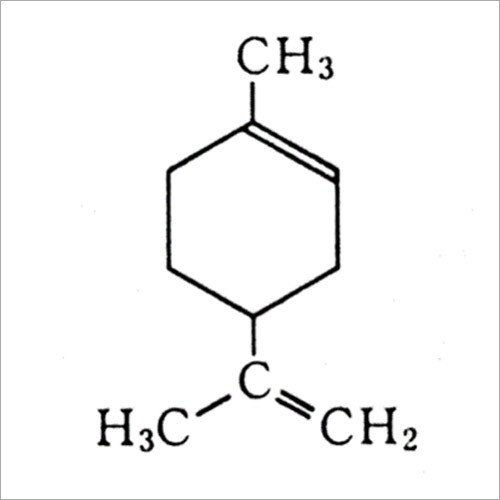
D- Limonine
650 INR
Product Details:
- CAS No 5989-27-5
- Appearance Clear Colorless Liquid
- Density 0.841 Gram per cubic centimeter(g/cm3)
- Purity 97%
- Extraction Type Cold Pressed
- Storage Room Temperature
- Gender Unisex
- Click to View more
X
D- Limonine Price And Quantity
- 25 , , Kilograms
- 650 INR
D- Limonine Product Specifications
- Cool dry place
- 2 Years
- Citrus
- Insoluble in Water
- Orange
- D Limonene
- 200 Kilograms (kg)
- 97%
- Cold Pressed
- Room Temperature
- Natural Essential Oil
- Clear Colorless Liquid
- 5989-27-5
- Eco-Friendly
- 0.841 Gram per cubic centimeter(g/cm3)
- Adults
- Unisex
- Used as a flavoring, fragrance, solvent, and cleaning agent
- 176C
- Liquid
- Not classified as hazardous under normal conditions
- 136.24 g/mol
- 1.472 - 1.474
- Industrial & Food Grade
- 48C
- C10H16
D- Limonine Trade Information
- 10 , , Kilograms Per Week
- 1 Days
Product Description
We are considered in the market to be one of the leading providers of this impeccable range of D-LimonineChemical. To maintain this reputation, we engage in the following of industry guidelines, utilizing the finest ingredients, in the best possible combination. This ensures the products effectiveness and longer shelf life.
Features:
Features:
- Free from impurities
- High viscosity
- Characteristic color and fragrance
Specification :
| Item | D-Limonene |
| Chemical Name | 4-iso propenyl-1-methyl cyclohexane |
| CAS No. | 5989-27-5 |
| EINECS No. | 232-433-8 |
| FEMA No. | 2633 |
| Formula | C10H16 |
| Molecular Weight | 136.24 |
| Color/Appearance | Colorless mobile liquid |
| Odour | Conforms to Standards |
| Flash Point | 48oC |
| Boiling Point | 177oC |
| Specific Gravity (at 20oC) | 0.838 to 0.8441 |
| Refractive Index (at 20oC) | 1.4701 to 1.4740 |
| Optical Rotation (at 20oC) | +95.55o to +104o |
| Evaporation Residue | Max. 1% |
| Purity | Min. 95% |
Versatile Applications
D-Limonene finds widespread use as a flavoring and fragrance in food and cosmetic industries, as well as a solvent and cleaning agent in industrial settings. Its citrus scent and effective cleaning properties make it a preferred choice for eco-conscious manufacturers and consumers alike.
Storage and Stability
To maintain optimal quality, D-Limonene should be stored at room temperature in a cool, dry place. This ensures its shelf life of up to two years, preventing degradation and preserving its purity for industrial and food-grade uses.
FAQs of D- Limonine:
Q: How should D-Limonene be stored to maintain its quality?
A: D-Limonene should be stored in a cool, dry area at room temperature to preserve its properties and extend its shelf life to two years.Q: What are the main uses of D-Limonene in industry and food applications?
A: D-Limonene is commonly used as a flavoring and fragrance agent, as well as a solvent and cleaning agent in both industrial and food-grade sectors.Q: When is D-Limonene considered eco-friendly in product formulations?
A: D-Limonene is eco-friendly due to its derivation from natural orange peels via cold pressing, making it a sustainable alternative to chemical solvents in various applications.Q: Where is D-Limonene typically sourced from?
A: D-Limonene is extracted from orange peels, commonly sourced in India by manufacturer-exporters using cold pressing techniques.Q: What benefits does D-Limonene offer compared to synthetic alternatives?
A: D-Limonene provides a natural citrus aroma, effective cleaning and solvent capabilities, and lower toxicity, making it suitable for adults and environmentally conscious users.Q: Is D-Limonene hazardous under normal handling conditions?
A: No, D-Limonene is not classified as hazardous when handled under standard conditions, but proper storage is still recommended to ensure safety.Q: Can D-Limonene dissolve in water, and how does this affect its usage?
A: D-Limonene is insoluble in water, making it beneficial for applications requiring oil-based solutions such as cleaning agents and industrial solvents.Tell us about your requirement

Price:
Quantity
Select Unit
- 50
- 100
- 200
- 250
- 500
- 1000+
Additional detail
Mobile number
Email

Other Products in 'Natural Ingredients' category

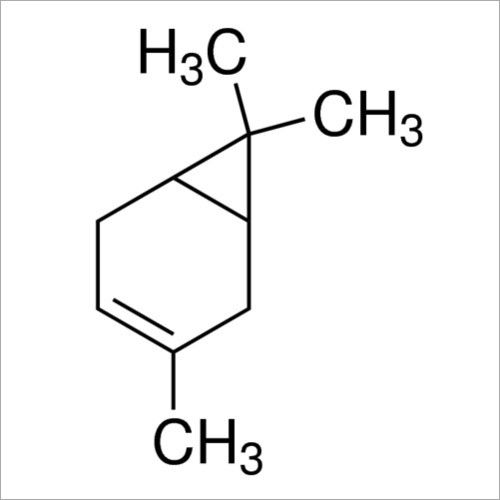


We accept only bulk quantity orders & mainly deals in Europe, USA, Japan, Indonesia.
Contact Us

- 485- A/12-A, Dilshad Garden, Indl Area, G.T. Road, Delhi - 110095, India
- Phone : 08045802014
GST : 07AAACN3669B1ZO

- Mr Pradeep Khandelwal (Managing Director)
- Mobile : 08045802014
- Send Inquiry
 Send Inquiry
|


Our Products
 Send Inquiry
 Send SMS
 Call Me Free
NATURAL AROMA PRODUCTS PVT. LTD.
All Rights Reserved.(Terms of Use)
Developed and Managed by Infocom Network Private Limited.
Developed and Managed by Infocom Network Private Limited.


 English
 Spanish
 French
 German
 Italian
 Chinese (Simplified)
 Japanese
 Korean
 Arabic
 Portuguese